
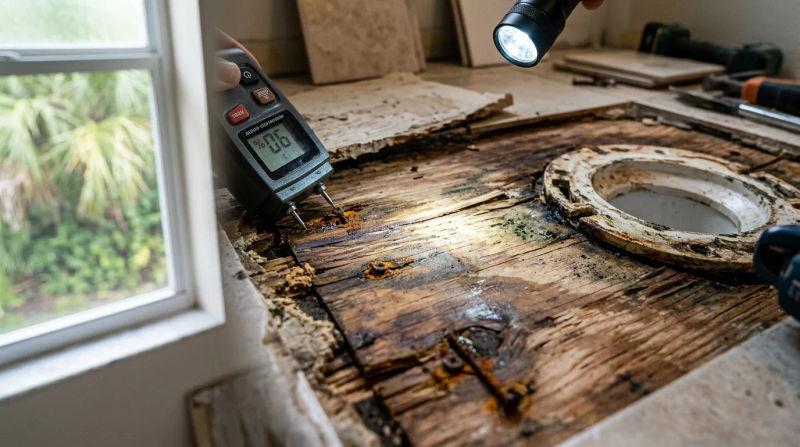
As a project manager overseeing residential builds and remodels for over 15 years, I've seen firsthand how a small issue in a bathroom can signal a much larger problem lurking beneath the surface. You step out of the shower one morning and notice the floor feels slightly soft underfoot, almost like a sponge. Or perhaps you've spotted a hairline crack forming in the tile near the base of your toilet. These aren't just cosmetic quirks; they are often the first warnings that your bathroom's subfloor is in distress. In a place like Bradenton, our hot, humid climate can unfortunately accelerate these issues, making it crucial to understand the signs before you commit to a full bathroom remodel.
Especially as we move through September, the persistent humidity can make already-weakened wood feel spongier and amplify any underlying musty odors. This is the perfect time to investigate, as these subtle clues can save you from placing expensive new tile and fixtures over a failing foundation.
Common Signs and Symptoms
From our experience on job sites across Manatee County, subfloor problems rarely appear overnight. They develop over time, sending out distinct signals. Our trained crews are taught to spot these indicators during any initial assessment. Here’s what you should look for:
- A Spongy or Bouncy Feeling: This is the most classic symptom. The floor gives or flexes when you walk on it, particularly around the toilet, the entrance to the shower, or in front of the vanity. This indicates the wood sheathing has lost its structural integrity, a primary focus when diagnosing spongy bathroom floor causes.
- Cracked Tiles or Grout Lines: Tile and grout are rigid. When the subfloor beneath them flexes, they crack under the pressure. Look for tile cracks around toilet bases or radiating out from the corners of a tub or shower. This movement is a clear sign the subfloor is no longer providing a stable base.
- A Rocking or Unstable Toilet: A toilet should be firmly anchored to the floor. If it wobbles or shifts when you sit down, it’s a major red flag. This usually means the toilet flange has come loose because the wood subfloor it's bolted to has rotted away.
- Visible Water Stains: For second-story bathrooms, one of the most obvious clues is a discolored, brownish stain on the ceiling of the room below. This is undeniable proof of a water leak that has saturated the subfloor assembly and is a tell-tale sign of subfloor damage under shower or tub areas.
- Persistent Musty Odors or Visible Mold: If you can't seem to air out a damp, earthy smell no matter how much you clean, it’s likely coming from moisture trapped within the floor system. Check along baseboards and in vanity cabinets for black or greenish spots of mold.
- Lifting or Peeling Flooring: For vinyl, linoleum, or LVP floors, if the corners are curling up or seams are separating, it's a sign that moisture is getting underneath and causing the adhesive to fail and the subfloor to swell.
- Gaps Between the Floor and Baseboard: As a subfloor sags under the weight of fixtures and moisture damage, it can pull away from the wall, creating a visible gap between the bottom of the baseboard and the surface of the floor.
What Causes This Problem
Understanding the root cause is critical for a lasting repair. In almost every case our technicians investigate, the culprit is prolonged exposure to moisture. Here are the most common sources:
- Plumbing Leaks: This is the number one cause. A failing toilet wax ring is a frequent offender, creating a slow, hidden leak every time the toilet is flushed. Other sources include leaky shower valves inside the wall, cracked drain lines, and loose water supply connections under the sink.
- Failed Waterproofing: Gaps in the caulk around your tub, a cracked shower pan, or deteriorated grout in a tile shower allow water to seep past the finished surface and into the wood structure below. Over months or years, this constant trickle causes extensive rot.
- High Humidity and Condensation: In Bradenton’s climate, the battle against humidity is constant. Bathrooms without proper ventilation trap warm, moist air. This moisture condenses on cool surfaces like pipes and toilet tanks, dripping onto the floor and saturating the subfloor over time.
- Structural and Age-Related Issues: The age of your home can play a significant role. Many historic homes in the region, like the pre-1940s Craftsman bungalows and Florida vernacular styles found in Palmetto, were built with plank subfloors rather than modern plywood or OSB. While durable, these planks can shrink and expand over decades, and the original plumbing systems are far past their expected lifespan, making them more prone to slow leaks that cause damage. The cumulative stress of many late hurricane seasons can also exacerbate weaknesses in these older structures.
When to Call a Professional
When you notice a soft spot or a cracked tile, it can be tempting to attempt a quick DIY fix like applying new caulk or replacing a single tile. While well-intentioned, this approach almost never addresses the underlying issue. The damage you see on the surface is often just the tip of the iceberg.
A bathroom subfloor repair is a structural job, not a cosmetic one. Deciding when to call for professional help is key to protecting your home's value and safety.
Here’s why we always recommend a professional assessment:
- Accurate Diagnosis: An experienced professional won't just look at the floor. Our crews use moisture meters and sometimes thermal imaging to trace the moisture back to its source. Fixing the leak is the first and most important step. Without it, any repair will fail again.
- Assessing the Full Scope: What looks like a small area of subfloor damage under shower can often extend several feet in every direction. Professionals know how to safely remove flooring and inspect the subfloor and joists to determine the full extent of the rot. An organized workflow is essential to contain the work area and manage the discovery process.
- Structural Expertise: Replacing subfloor sheathing and, potentially, rotted floor joists requires an understanding of structural loads. The repair must be done in a way that properly transfers weight and ties back into the home's framing. This is not a job for a handyman; it requires true construction knowledge.
- Proper Materials and Process: In Florida's environment, simply replacing rotten wood with standard plywood isn't enough. We rely on standardized processes that include using pressure-treated lumber for joists, high-quality, moisture-resistant subfloor panels, and modern waterproofing membranes before any new flooring is installed. This ensures the repair will last.
Conclusion
Your bathroom floor is more than just a surface; it's a critical part of your home's structure. Symptoms like a spongy feel, cracked tiles, or a wobbly toilet are direct communications from your home that something is wrong. The combination of water, fixtures, and humidity makes the bathroom one of the most vulnerable areas to structural decay, a fact amplified by our local climate.
Ignoring these signs or opting for a surface-level fix will only allow the underlying moisture and rot to worsen, leading to a far more complex and expensive problem down the road. Acting early is the most cost-effective strategy. A small, targeted repair today can prevent a catastrophic failure and a full-scale structural rebuild tomorrow.
If you notice any of these signs, contact a local Construction professional for an inspection. They have the expertise to diagnose the problem correctly and ensure your home remains safe and sound for years to come.