
After a hurricane or a strong July storm rolls through Bradenton, it’s natural to feel a sense of relief when you walk around your property and see no obvious damage. The windows are intact, the roof looks fine, and there are no fallen trees. But weeks later, you might notice something subtle - a faint, earthy smell that seems to get stronger on humid days. You might dismiss it at first, but this persistent, musty odor after hurricane in walls is often the very first sign of a hidden problem: slow, insidious water intrusion.
As a Senior Construction Project Manager with over 15 years of experience in Manatee County, I’ve seen firsthand how deceptive post-storm damage can be. In our hot, humid climate, water that is forced behind your home's exterior doesn't just evaporate. It gets trapped, creating the perfect environment for mold, rot, and structural decay. Identifying the problem early is crucial to preventing minor issues from becoming major, costly repairs.
Common Signs and Symptoms
The most significant hurricane water intrusion often isn't a dramatic flood but a slow, hidden leak inside your walls. Our trained technicians know that the most telling clues are often subtle. Here are seven hidden signs you should be looking for after a storm:
- A Persistent Musty Odor: This is your nose telling you what your eyes can't see. That damp, earthy smell is caused by mold and mildew metabolizing damp organic materials like drywall paper and wood studs. If the smell is concentrated in a specific room or worsens when the air conditioning is off, it’s a major red flag.
- Subtle Wall Discoloration: Look for faint, yellowish, or brownish stains on your drywall or ceiling. They can be easy to mistake for shadows or old stains, but new discoloration, no matter how small, is one of the clearest signs of wall moisture Bradenton homeowners can spot. These stains are caused by water dissolving minerals in the drywall and wood and depositing them on the surface as it dries.
- Peeling, Bubbling, or Cracking Paint: Moisture behind drywall will cause the bond between the paint and the wall surface to fail. You might see small bubbles, blisters, or fine cracks appearing, especially around windows, doors, and near the base of the wall. This is a sign that the drywall itself is saturated.
- Warped or Swollen Baseboards: Wooden or MDF (medium-density fiberboard) baseboards act like sponges. As water from inside the wall cavity wicks down due to gravity, the baseboards will absorb it, causing them to swell, warp, or separate from the wall. Check the corners and lower sections of your walls for any signs of deformation.
- Changes in Wall Texture: Gently press on your drywall in areas you suspect might be damp. A healthy wall feels firm and solid. If it feels soft, spongy, or even slightly crumbly, it means the gypsum core has been compromised by moisture and is losing its structural integrity.
- Visible Mold or Mildew Spots: Any visible mold, even a few small black or green spots on a baseboard or in the corner of a room, often indicates a much larger, hidden colony inside the wall. Never just clean the surface spot without investigating the source of the moisture that’s allowing it to grow.
- Increased Indoor Humidity: If you notice that your home feels unusually damp, your windows have condensation on the inside, or your AC seems to be running constantly without cooling effectively, it could be due to excess moisture evaporating from saturated building materials into your indoor air.
What Causes This Problem
Understanding the cause helps you appreciate the risk. The primary culprit is intense, wind-driven rain damage Florida homes are uniquely susceptible to. During a hurricane or severe tropical storm, high winds create extreme pressure differences on your home's exterior. This pressure can force rainwater through microscopic cracks and gaps that would otherwise pose no threat.
Many homes in the Bradenton area, particularly those built during the suburban boom of the 1990s and 2000s, feature complex rooflines with multiple hips and gables and stucco exteriors. While architecturally appealing, these features create more seams and joints where water can penetrate.
- Stucco and Siding: Stucco can develop hairline cracks over time. Wind-driven rain can force water through these tiny fissures, where it becomes trapped between the stucco and the underlying weather-resistant barrier. Similarly, water can be driven behind vinyl or fiber cement siding at seams and joints.
- Window and Door Frames: The seals around windows and doors are common failure points. High winds can flex the frames, breaking the caulk seal and creating a direct path for water into the wall cavity.
- Roof-to-Wall Intersections: Areas where a lower roofline meets a second-story wall are highly vulnerable. Improperly installed or damaged flashing in these areas can channel large amounts of water directly behind your exterior cladding.
Once inside the wall, the moisture is trapped. The insulation gets saturated, the wood studs begin to rot, and the paper backing on the drywall becomes a food source for mold. In our year-round humidity, this process happens alarmingly fast.
When to Call a Professional
It can be tempting to take a “wait and see” approach or attempt a DIY fix, but when it comes to water intrusion, time is not on your side. Surface mildew on a shower tile can be a simple DIY cleanup. However, the signs we’ve discussed here almost always point to a problem within the building envelope that requires expert diagnosis.
You should call for a professional assessment if you notice any of the seven signs listed above.
Here’s why: an experienced professional team doesn't just look at the surface. Our technicians use a systematic process and specialized equipment to get a clear picture of the problem.
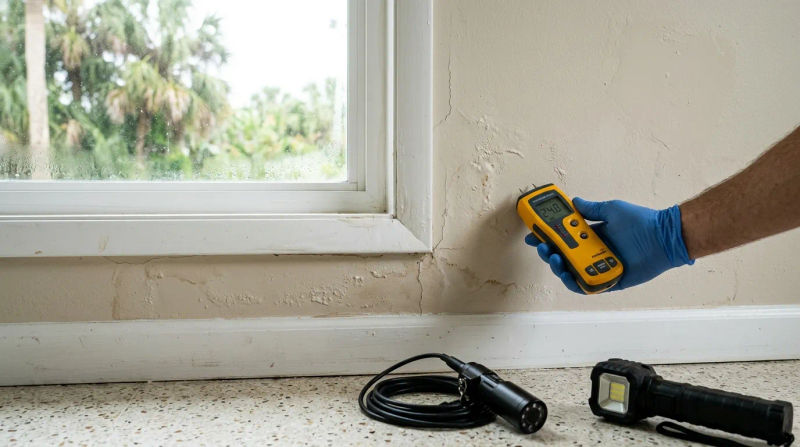
- Advanced Diagnostic Tools: We use tools like thermal imaging cameras to detect temperature differences in walls that indicate hidden moisture. We also use non-invasive moisture meters to measure the moisture content within the drywall and studs without having to cut holes.
- Source Identification: Simply fixing the damp drywall is not a solution. A qualified professional will trace the moisture back to its source - be it a failed window seal, a flashing issue, or a crack in the stucco - to ensure the problem is permanently resolved.
- Comprehensive Damage Assessment: Water can travel surprisingly far. A leak that shows up in a corner might have originated from the roof on the other side of the room. A professional inspection will map the full extent of the water damage, which is critical for proper repairs and for documenting insurance claims.
Attempting to fix it yourself by simply painting over a stain or cleaning a mold spot only hides the evidence. It allows the underlying rot and mold to continue growing, leading to much more significant structural and health problems down the road.
Conclusion
After a storm, the most dangerous damage is often the damage you can't see. Hurricane water intrusion is a stealthy threat that can compromise your home’s structure and your family’s health if left unaddressed. Be vigilant for the subtle clues: a persistent musty smell, minor paint bubbling, or swollen baseboards. These are not small cosmetic issues; they are urgent warnings that moisture is trapped within your walls.
Acting early is the key. In Bradenton's climate, a small leak can escalate into a major mold and rot problem in a matter of weeks. Don't wait for a small stain to become a gaping hole. A proactive inspection can save you thousands in repairs and give you peace of mind.
If you notice any of these signs, contact a local Construction professional for an inspection.