
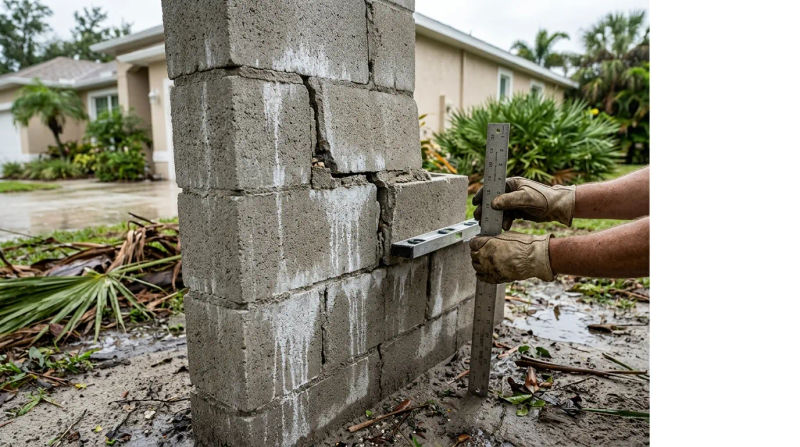
Living in Florida, we’re all accustomed to the rhythm of hurricane season. After a tropical storm passes, it’s second nature to walk the property, picking up fallen branches and checking for roof damage. But it’s just as crucial to inspect your property's masonry and concrete block (CMU) walls. You might notice a new, jagged crack running up your garden wall that wasn't there before, or see that the ground, still saturated from days of rain, seems to be pushing against the base of your home's foundation wall. These are not just cosmetic issues; they can be early warnings of more significant structural problems, especially here in Bradenton where the hot, humid climate and heavy July storms can quickly turn a small issue into a major one.
As a Senior Construction Project Manager with over 15 years of experience in Manatee County, I’ve seen firsthand how our intense weather can compromise masonry structures. Understanding what to look for after a storm is the first step in protecting your investment and ensuring your family's safety.
Common Signs and Symptoms
After a storm, a thorough visual inspection of your block walls is essential. Our technicians are trained to spot subtle indicators of stress, but homeowners can identify the most common red flags. Here are the key signs that your wall may need professional attention:
- Stair-Step Cracks: These are the most frequent cracks we see. They follow the mortar joints in a zig-zag or stair-step pattern. While small, hairline stair-step cracks can result from minor initial settling, new or widening ones after a storm often indicate significant foundation movement or soil pressure. This is a classic example of potential masonry cracks after storm Bradenton homeowners should watch for.
- Horizontal Cracks: A horizontal crack running along the length of a block wall is a serious concern. This is rarely caused by simple settling. It typically points to immense external pressure pushing against the wall. This could be from saturated soil (hydrostatic pressure) or, in severe cases, a failing foundation. These are primary bowed CMU wall warning signs that require immediate assessment.
- Vertical Cracks: Cracks that run straight up and down can be tricky. A single, thin vertical crack might be from concrete shrinkage during curing. However, a wider vertical crack, especially one that is wider at the top or bottom, often signals significant foundation settlement or upheaval. If the crack runs through the block itself and not just the mortar, the stress is substantial.
- Bowing or Leaning Walls: This is a critical structural warning. A wall that appears to be bulging inward or leaning outward is under extreme stress and at risk of failure. To check for bowing, stand at one end of the wall and look down its length. For a more precise check, you can tape a string to the top of one corner and the bottom of the other. If there's a significant gap between the string and the wall's center, it's bowing.
- Crumbling or Loose Mortar: Pay close attention to the joints between the blocks. If you can easily scrape away mortar with a screwdriver or if you see sandy piles of it on the ground, the mortar is failing. Wind-driven storm rain can scour out old, weakened mortar, compromising the wall's integrity. This is a common problem with any loose mortar block wall Florida properties may have.
- Water Stains or Efflorescence: Have you noticed white, chalky stains on your wall? This is called efflorescence. It occurs when water seeps through the porous concrete block, dissolves salts within it, and then evaporates on the surface, leaving the salt deposits behind. It's a clear sign that your wall has a moisture intrusion problem, which can weaken the structure and lead to mold.
- Displaced Blocks: If you can see that individual blocks are no longer flush with the rest of the wall - pushed in or out - it means there has been a significant structural shift. This requires immediate professional evaluation.
What Causes This Problem
Understanding the forces at play helps clarify why these symptoms appear, especially after a storm. Block walls are strong under vertical loads but vulnerable to lateral (sideways) pressure.
Hydrostatic Pressure: This is the primary culprit in Bradenton's climate. During a heavy summer storm, our sandy soil becomes super-saturated with water. This water-logged soil is heavy and exerts immense pressure against the underground portion of your foundation and retaining walls. The wall wasn't designed to be a dam, and this pressure can cause it to bow, crack, and eventually fail.
Soil Erosion and Shifting: The sheer volume of water from a tropical storm can wash away the soil that supports the base of your wall's footing. This creates a void, causing a section of the wall to settle and crack under its own weight.
Wind Loading: Never underestimate the power of wind. Sustained hurricane-force winds create a powerful pressure differential on your home and property walls. This force can stress mortar joints and, over time, contribute to leaning or cracking, especially in taller, unbraced garden or privacy walls.
Age and Material Integrity: Masonry, while durable, doesn't last forever without maintenance. Over decades, exposure to Florida's sun, humidity, and salt air degrades mortar. This is particularly relevant for older properties. For instance, some historic districts in Florida, like Plant City's downtown core, feature beautiful brick buildings from the pre-1940s. The lime-based mortars used in that era are softer and more susceptible to water erosion than modern Portland cement-based mortars. While your home may be newer CMU construction, the principle is the same: all masonry requires upkeep.
Poor Initial Construction: Unfortunately, some problems are built-in from the start. A lack of proper steel reinforcement (rebar), an undersized footing, or inadequate drainage systems (like a French drain) can create a weak point that a storm will inevitably expose.
When to Call a Professional
It can be tempting to try a quick patch, but with block walls, a surface-level fix often hides a deeper problem. Knowing when to call for help is key to a lasting and safe solution.
Our crews follow a standardized process: first, diagnose the root cause, and only then, prescribe the correct repair. A simple crack patch is useless if the soil pressure that caused it isn't addressed.
Consider DIY (With Extreme Caution) For:
- A single, hairline crack (less than 1/16th of an inch) in a mortar joint that has not changed in size. You might apply a high-quality masonry sealant to keep water out, but you must monitor it closely.
Call a Professional Immediately For:
- Any horizontal crack. This is non-negotiable.
- Stair-step cracks wider than a credit card or that are actively growing.
- Any visible bowing, bulging, or leaning. These are urgent bowed CMU wall warning signs, indicating the wall is under load and could be unstable.
- Crumbling or widespread loose mortar. Repointing (the process of replacing mortar) requires skill to ensure a strong bond and prevent further water intrusion. A proper block wall repair is needed.
- Multiple cracks of any type appearing at once, especially after a storm.
An experienced professional will do more than just look at the crack. They will assess the surrounding landscape, check for drainage issues, and determine the underlying cause of the failure. This diagnosis dictates the right repair strategy, whether it involves carbon fiber reinforcement, wall anchors, or addressing the water problem at its source.
Conclusion
Your home's block walls are a critical part of its structural system. After a storm, taking a few minutes to inspect them for cracks, bowing, or loose mortar is a vital step in proactive home maintenance. The signs we've discussed - especially horizontal cracks, bowing walls, and crumbling mortar - are clear indicators that your wall is under stress.
Here in Florida, with the peak of storm season upon us, waiting is a risk. What is a simple crack today could become a catastrophic failure during the next major weather event. Addressing these issues early with a proper diagnosis and repair is always safer and more cost-effective in the long run.
If you notice any of these signs, contact a local Construction professional for an inspection. An expert assessment will provide peace of mind and a clear path forward to securing your property.