
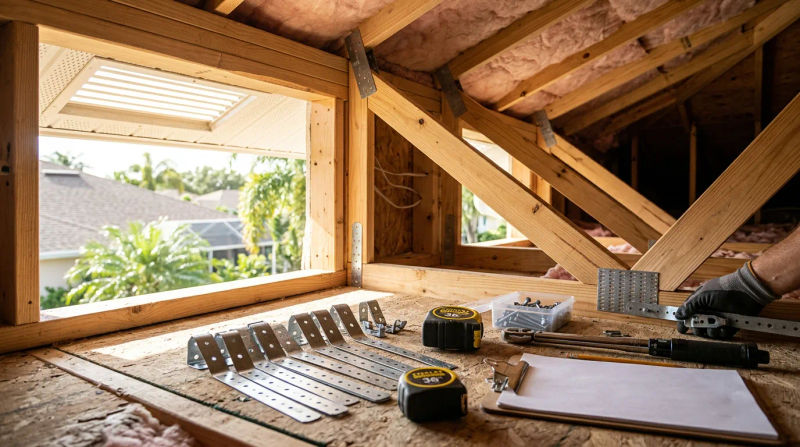
As a Senior Construction Project Manager here in Manatee County for over 15 years, I know that when hurricane season approaches, cost is the number one question on every homeowner's mind. You want to protect your home - your biggest investment - but you need to do it within a realistic budget. The good news is that strengthening your home against hurricane-force winds is one of the smartest investments you can make. My goal here is to give you a transparent, no-nonsense guide to understanding the costs associated with hurricane strap retrofitting, so you can plan effectively before a storm is on the horizon.
Average Costs in Bradenton
Let's get straight to the point. For a typical single-family home in the Bradenton area, the hurricane strap retrofit cost generally falls between $2,500 and $7,000. This is a significant range, and for good reason. A smaller, single-story home with a simple roof and easy attic access will be on the lower end of that scale. A larger, two-story home with a complex roofline and limited access will trend toward the higher end, or potentially exceed it.
This price typically includes:
- The hardware (straps or clips)
- All labor, including potential soffit removal and re-installation
- Permitting fees
- Coordination of the required inspections
It's crucial to understand that these figures are estimates. The only way to get a precise number for your property is to receive a detailed quote from a qualified contractor. An accurate retrofit tie-down estimate Manatee County contractors provide should be based on a direct inspection of your home's specific structure.
Factors That Affect the Price of a Hurricane Strap Retrofit
No two retrofit projects are exactly alike. Several key factors influence the final cost, and understanding them will help you see why one quote might differ from another.
1. Roof Complexity and Home Architecture This is arguably the biggest cost driver, especially in our area. Many homes in Bradenton, particularly those built in the 1990s and 2000s in communities like East Lake, feature complex, high-pitched roofs with multiple gables, hips, and valleys. Each of these connection points between the roof truss and the wall top plate needs to be secured. A simple rectangular roof has far fewer connection points than a multi-faceted one, directly impacting both material and labor time.
2. Attic and Soffit Access How our crews access the connection points is a major factor in the hurricane clips labor cost Florida contractors will quote.
- Spacious Attic: If you have a large, open attic with plenty of headroom, our technicians can move efficiently to install the straps from the inside. This is the most cost-effective scenario.
- Limited Access: Low-pitched roofs, vaulted ceilings, or attics filled with ductwork and insulation make interior work difficult and time-consuming.
- Soffit Removal: In many cases, especially on the eaves of a low-slope roof, the only way to access the truss-to-wall connection is from the outside. This requires carefully removing sections of your soffit, installing the straps, and then reinstalling the soffit. This process requires more labor and skill to ensure a clean finish, adding to the overall cost. Painting may also be required afterward.
3. Number and Type of Connectors Required Every home has a specific number of trusses, and each one needs to be secured at both ends. The total count can range from 40 to over 100 connection points. A wind mitigation inspector or engineer will determine the exact requirements. While the cost of individual straps isn't high, the sheer quantity needed for a large home adds up.
4. Existing Framing and Conditions During a retrofit, we sometimes encounter unforeseen conditions. Older homes might have wood that is not in ideal condition, or the existing framing may require minor adjustments to properly seat the new hardware. Our trained crews are equipped to handle these situations, but they can add time and materials to the job.
How to Get the Best Value on Your Retrofit
Getting the "best value" isn't just about finding the lowest price - it's about getting a durable, effective installation that passes inspection and delivers real protection and insurance savings.
- Start with a Wind Mitigation Inspection: Before you even call a contractor, consider hiring an independent wind mitigation inspector. They will provide a detailed report (the OIR-B1-1802 form) that shows exactly where your home is vulnerable. This report is your roadmap. It tells contractors precisely what needs to be done to earn you valuable insurance credits, ensuring you don't pay for unnecessary work.
- Look for Quality and Experience: A cheap installation that fails the final inspection is a complete waste of money. You'll have to pay another contractor to fix it. It's better to work with an established company that has organized workflows and standardized processes. Experienced crews work more efficiently and get the job done right the first time, ensuring you get your insurance discount.
- Bundle with Other Projects: If you're already planning to replace your soffits, fascia, or gutters, that is the perfect time to tackle a hurricane strap retrofit. The soffits will already be removed, drastically reducing the labor cost to install hurricane straps Bradenton homeowners would otherwise pay for access.
- Ask for an Itemized Quote: A professional contractor will provide a clear, detailed quote that breaks down the costs of materials, labor, and permits. This transparency helps you compare apples to apples and avoids surprise charges later.
Key Questions to Ask Your Contractor
When you're ready to get quotes, you are in the driver's seat. Arm yourself with these questions to vet potential contractors and ensure you're hiring a true professional.
- Are you licensed and insured to perform this specific work in Manatee County? Ask to see their license and proof of liability and workers' compensation insurance.
- Does your retrofit tie-down estimate include all costs? Clarify if the quote includes soffit removal/reinstallation, painting, permits, and inspection fees.
- What type of hardware will you use? The contractor should be able to specify the Simpson Strong-Tie straps (or equivalent) they plan to use and confirm they meet Florida Building Code.
- How will you protect my property? Ask about their process for covering landscaping, protecting your home's interior if working in the attic, and cleaning up the job site daily.
- Who handles the permitting and scheduling of inspections? A full-service contractor should manage this entire process for you.
- Can you provide references from recent, similar jobs in the Bradenton area? Speaking to past clients is a great way to gauge a company's reliability and quality of work.
Strengthening your home's roof-to-wall connection is a powerful step toward protecting your family and property. While it requires an upfront investment, the peace of mind and potential for significant, long-term insurance savings make it an incredibly worthwhile project. In my experience, a properly executed retrofit is one of the most effective structural improvements a Florida homeowner can make.
For a personalized and detailed estimate based on your home's unique architecture in the Bradenton area, contact Jbl Construction &developers Corp for a free consultation. Our team can provide an itemized plan to help you budget effectively and secure your home.