
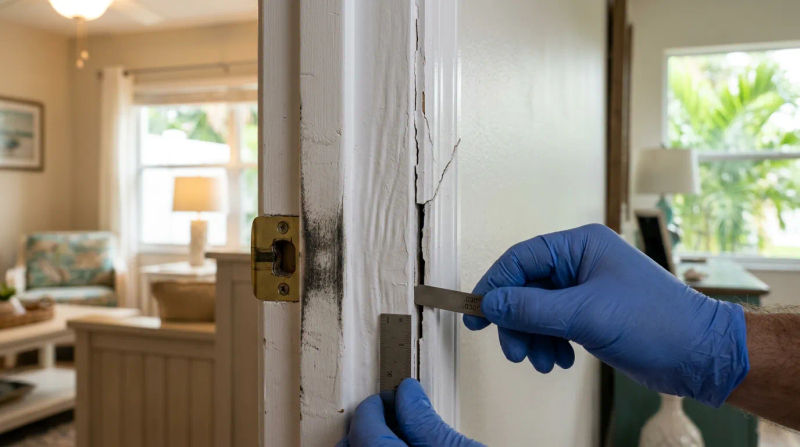
That interior door - the one to your bedroom or home office - used to close with a satisfying click. Now, as we navigate through September's heat and late-season rain here in Tampa, you find yourself having to give it a firm shoulder nudge to get it to latch. It sticks along the top, rubbing against the frame with a groan. You might dismiss it as the house “settling,” but more often than not, this is a direct response to the intense, moisture-laden air that defines our climate.
Changes in how your interior doors operate are often the first, most obvious clues that your home is struggling with high humidity. Understanding these signs can help you address minor issues before they evolve into more significant and costly repairs.
Common Signs and Symptoms
From my experience managing residential projects, I can tell you that wood is a dynamic material, constantly reacting to its environment. In a place like Tampa, that reaction is often swelling. Our technicians are trained to spot these specific symptoms during assessments, as they can point to underlying issues beyond just a sticky door. Here are the key door frame warping signs and related symptoms to watch for:
- The Door Sticks or Rubs: This is the most common complaint. The door, which once swung freely, now makes contact with the jamb or the head of the frame. You may see paint worn away or scuff marks where the friction occurs.
- Uneven Gaps Around the Door: A properly hung door has a consistent, narrow gap (usually about the thickness of a nickel) on all sides. When humidity causes swelling, these gaps can disappear on one side and widen on another. Look at the door when it's closed - are the lines parallel with the frame?
- The Latch Doesn't Align: If you have to lift, push, or jiggle the handle to get the latch bolt to enter the strike plate, it’s a clear sign of misalignment. The door has swollen and shifted, moving the latch out of its original position.
- Visible Warping or Bowing: Stand at one end of the door and look down its edge toward the other end. Is it perfectly flat, or does it curve or bow in the middle? A warped door will not sit flush in its frame, leading to drafts and latching problems.
- Cracked Paint at Frame Joints: The corners of your door frames (where the vertical and horizontal pieces meet) are called miter joints. If you see fine cracks appearing in the paint at these joints, it indicates that the frame itself is expanding and contracting, putting stress on the finish.
- New or Widening Trim Gaps: Look closely at the baseboards and casing around your doors. The appearance of trim gaps high humidity is a classic symptom. As the wooden framing of the house and the trim itself absorb moisture, they expand and can pull away from the drywall, creating noticeable gaps.
- Strained or Noisy Hinges: When a door swells, it becomes heavier and no longer hangs squarely on its hinges. This added, uneven stress can cause hinges to creak, groan, or even pull loose from the jamb over time.
In many historic Tampa neighborhoods like Seminole Heights, homes from the pre-1940s Craftsman and Bungalow era are particularly susceptible. These beautiful properties were often built with solid wood doors and extensive handcrafted trim, which are much more reactive to moisture than modern, engineered materials.
What Causes This Problem
The primary culprit behind these issues is moisture. Wood is a hygroscopic material, meaning it naturally absorbs and releases water vapor from the air. Here in Tampa, our environment is a perfect storm for this process.
- Pervasive Tampa Humidity: Our region's climate is defined by high relative humidity for most of the year. During the late summer and early fall, as hurricane season peaks, the air becomes saturated. Your home's wooden components - from the structural framing to your interior doors and trim - absorb this airborne moisture and physically expand. This is the root cause of Tampa humidity door swelling.
- Material Properties: The effect is especially pronounced in older homes. The solid wood doors and frames common in pre-1940s houses can absorb more moisture and move more dramatically than the composite or hollow-core doors used in newer construction. While beautiful and durable, this classic craftsmanship requires an awareness of its interaction with our local climate.
- Lack of Proper Sealing: A door needs to be sealed on all six sides - front, back, top, bottom, and both edges. Often, the top and bottom edges are left unpainted or unsealed after installation. These exposed wood grains act like straws, wicking moisture directly from the air and causing the door to swell disproportionately.
- Interior vs. Exterior Conditions: Sometimes the problem is a significant difference in temperature and humidity on either side of a door. For example, a door leading to a garage or an unconditioned sunroom can warp because one side is exposed to humid air while the other is in a climate-controlled space. Our diagnostic process always includes assessing the environmental conditions surrounding the problem area.
While some minor seasonal movement is normal, significant warping, sticking that doesn't resolve, or visible gaps are signs that the moisture is causing a persistent problem that requires professional attention for interior door repair.
When to Call a Professional
It can be tempting to either ignore a sticking door or try a quick fix. However, knowing when to call for help can save you from causing more damage or masking a larger problem.
Consider a DIY approach if:
- The sticking is very minor and only occurs on the most humid days.
- The issue resolves itself once the weather dries out a bit.
- You are comfortable with basic adjustments, like tightening hinge screws.
You should call a qualified professional when you see these signs:
- The Problem is Persistent: If the door sticks year-round or the warping doesn't improve in drier weather, the wood has likely taken on a permanent set and won't correct itself.
- The Frame is Compromised: If you see cracks in the jamb or the entire door frame warping signs are obvious, this is beyond a simple door adjustment. Trying to force a warped door into a warped frame can cause significant damage.
- Multiple Doors are Affected: If several doors in your home are suddenly having issues, it could indicate a broader humidity control problem within your home that our technicians can help diagnose.
- Visible Gaps in Trim: Persistent trim gaps high humidity creates suggests movement that may require re-securing and caulking the trim for a stable, professional finish.
- You Lack the Tools or Expertise: An improper repair - like over-sanding a door or trying to plane it while it's still swollen - can create permanent damage. Our crews have organized workflows and the right tools to perform an interior door repair correctly, ensuring a smooth, lasting fit.
An experienced professional can accurately diagnose the root cause. We can determine if it's a simple case of seasonal swelling, a poorly installed door, or a symptom of a more serious moisture issue in your walls.
Conclusion
That sticking interior door is more than just a daily annoyance; it's a signal from your home. The high humidity of a Tampa September is often what makes these underlying issues impossible to ignore. Warped doors, misaligned latches, and gaps in your trim are all common signs that your home's wooden components are under stress from moisture.
While some minor seasonal changes are expected, especially in older homes, persistent problems should not be overlooked. Addressing these symptoms early can prevent more extensive damage to your doors, frames, and surrounding drywall. A professional assessment provides peace of mind and ensures the repair is done right.
If you notice any of these signs, contact a local Construction professional for an inspection.